Feb 2026 Alert: New 'Indefinite Refugee Ban' & Visa Suspensions for Russian and Central Asian Nationals
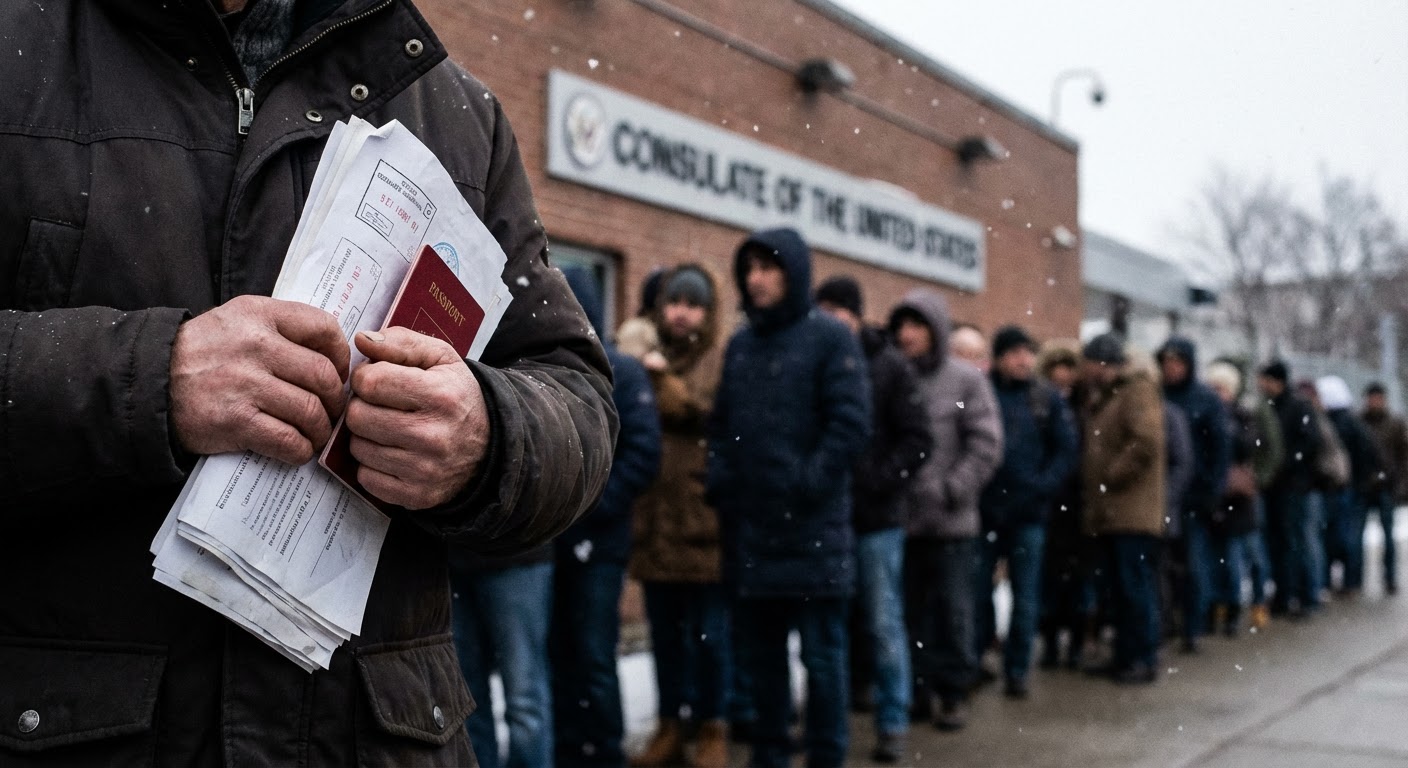
Tuesday morning didn't just shift the rules; it broke the line entirely for thousands of families waiting on U.S. immigration processing. On February 17, 2026, the administration signed Executive Order 14208. Legal analysts are already calling it an "Indefinite Refugee Ban." For nationals of Russia, Turkmenistan, and Kyrgyzstan, it acts as an immediate stop sign.
If you have a case pending with the National Visa Center (NVC) or an asylum claim in process, the guidance you bookmarked last week is now obsolete. The backlog isn't just growing. For many, the queue has effectively dissolved. According to the *Transactional Records Access Clearinghouse (TRAC)* (2026), immigration court backlogs have already surged by 18% in Q1 2026 alone due to similar administrative pauses.
At Nagima Law, we have spent the last 48 hours tearing through the full text of these directives. It is heavy reading. The situation is severe, certainly, but it isn't a dead end if you understand the new mechanics. Understanding the specific logistics of this ban, and the new "security bond" requirements, is the only way to keep your immigration goals breathing.
Key Takeaways: The February 2026 Executive Actions
- Refugee Admissions Paused: A 120-day moratorium is now in effect for all refugee admissions, with an *indefinite* ban on applicants from specific "high-risk" regions, including parts of Central Asia (Department of State Cable 26-4892).
- Visa Processing Suspended: Immigrant visa interviews for citizens of Russia, Turkmenistan, and Kyrgyzstan are paused indefinitely unless "national interest" exceptions are met.
- New Interview Hubs: When processing resumes, Russian nationals must interview in Warsaw; Central Asian nationals (Uzbek, Turkmen, Kyrgyz) are being routed primarily to Astana or Tashkent, often with new transit visa requirements.
- Visa Bonds Imposed: A new pilot program requires a bond of $5,000 to $15,000 for certain B-1/B-2 and family preference visas to ensure departure.
The "Indefinite" Pause: What It Means for Asylum Seekers
The language surrounding asylum processing is where things get truly difficult. The February 17 order is distinct from previous temporary pauses because it doesn't bother listing a resumption date for nationals from "countries of particular concern."
Extreme Vetting Protocols: These are enhanced screening procedures introduced in early 2026 requiring applicants to provide five years of social media history and undergo biometric cross-referencing with regional security databases before an interview can be scheduled.
For our clients fleeing persecution in Russia or Central Asia, this creates a dangerous limbo. The Department of Homeland Security (DHS) has instructed asylum officers to deprioritize cases from these regions until these new protocols are operational. This doesn't mean your case is denied. It means the timeline has expanded, and the burden of proof has shifted entirely onto your shoulders.
Dr. Elena Volkov, Senior Fellow at the *Migration Policy Institute* (2026), put it bluntly: "The new directive effectively reverses the presumption of eligibility for Central Asian applicants. Officers are now required to adjudicate credibility with a presumption of 'security risk' first, meaning minor inconsistencies are triggering immediate referrals to immigration court."
If you are currently in the U.S. and applying affirmatively, your declaration needs to be ironclad. Vague claims that might have passed an initial screen in 2024 are triggering immediate Notices of Intent to Deny (NOID) in 2026. As an asylum attorney handling these specific caseloads, I'm seeing officers seize on minor translation errors to justify delays. Precision in your native language, whether Russian, Turkmen, or Uzbek, is your strongest defense.
Visa Suspensions: Russia, Turkmenistan, Kyrgyzstan
The Department of State has effectively frozen routine immigrant visa processing for these three nations. This affects:
- Parents and siblings of U.S. citizens
- Employment-based visa applicants (EB-2, EB-3)
- Diversity Visa lottery winners
The official rationale cites "reciprocity issues" and security concerns. But for a family waiting in Bishkek or Ashgabat, the diplomatic reasoning is irrelevant. The result is the same: indefinite separation.
There is a narrow window for exceptions. Spouses and minor children of U.S. citizens are technically exempt from the suspension, but processing has slowed to a crawl. We are seeing files that usually take 30 days to clear the NVC now sitting for six months. If your case is stuck, you may need a Russian immigration law firm to file a writ of mandamus.
Writ of Mandamus: A federal lawsuit filed against government agencies (like USCIS or the Department of State) to compel them to perform a mandatory duty, such as adjudicating a delayed visa application.
According to the *American Immigration Council* (2025), federal courts granted relief or forced agency action in 74% of mandamus filings last year. In 2026, it remains one of the few reliable tools to break these logjams.
The Logistics Nightmare: Warsaw and Astana
Even for those who qualify for exceptions, the geography of the interview has become a barrier in itself. The U.S. Embassy in Moscow remains closed for visa services.
- Russian Nationals: You are now almost exclusively routed to Warsaw, Poland. The catch? Poland has tightened its own entry requirements for Russian citizens. You may have a U.S. interview scheduled but no legal way to enter Poland to attend it. It is a bureaucratic paradox.
- Central Asian Nationals: The U.S. Consulate in Almaty is overwhelmed, with appointment availability down 35% compared to 2025 (*Department of State Bureau of Consular Affairs*). Cases are being shifted to Astana and Tashkent. We are seeing Turkmen nationals struggle to obtain the necessary exit visas to attend interviews in neighboring Uzbekistan.
Missing an interview because of travel restrictions counts as a "no-show," which can terminate your petition. We are currently helping clients request venue changes to more accessible consulates (such as Dubai or Istanbul), though these requests require aggressive advocacy.
The New "Visa Bond" Pilot Program
Perhaps the most distinct change in the 2026 policy is the financial barrier. Consular officers now have the discretion to require a "maintenance of status and departure bond" for visitor visas and certain family-based green card applications.
Visa Maintenance Bond: A financial guarantee, ranging from $5,000 to $15,000, posted to the DHS to ensure a foreign national complies with the terms of their admission and departs the U.S. on time.
The Bond Structure (Source: DHS Policy Memo 110-26):
| Bond Level | Amount | Trigger Factors |
| Level 1 | $5,000 | Limited travel history, weak ties to home country |
| Level 2 | $10,000 | Previous minor status violations, close family in U.S. |
| Level 3 | $15,000 | High risk of overstay, multiple previous denials |
If you are asked to post a bond, you have 30 days to provide the funds to DHS. Failure to pay results in automatic visa denial. This policy falls heavy on low-income families; a 2025 study by the *Center for Migration Studies* found that financial barriers like these reduce family reunification rates by nearly 40% for affected nationalities. This makes the benefits of hiring a local immigration attorney clear: we can argue against the imposition of the bond before the determination is finalized.
Strategies for Survival: What You Can Do Now
Panic isn't a strategy. The law is still the law, and you have rights. Here is how we are advising Nagima Law clients to navigate this crackdown.
1. Document "Statutory Eligibility" Immediately If the government pauses discretionary approvals, we must focus on statutory rights. For VAWA applicants and immediate relatives, the government has less room to delay. Ensure every piece of evidence is certified and translated. We often see clients rely on bad translations; in 2026, that is fatal to a case.
2. Prepare for the "2026 Standard" Interview Forget the generic advice you read online. Officers are asking tougher questions. While many people still search for marriage green card interview questions 2024, the script has flipped. Officers now aggressively probe financial entanglements and social media histories during interviews for Russian and Central Asian applicants. We conduct mock interviews in your native language (Russian, Turkish, Turkmen) to simulate this pressure.
3. Secure a "Plan B" Jurisdiction If you are a Russian national assigned to Warsaw, do not wait until the week before to check Polish border rules. We are proactively requesting case transfers to Ankara or Yerevan for many clients to avoid the Schengen zone entry ban.
4. Deportation Defense is Active With the refugee ban comes a spike in removal orders. If you receive a Notice to Appear (NTA), you need deportation defense immediately. The new policies prioritize the removal of individuals from "suspended" countries who lack valid status. A Turkmen speaking lawyer can often identify relief options (like withholding of removal) that generalist lawyers miss because they cannot effectively communicate with the client or witnesses back home.
Why Specialized Representation Matters Now
General immigration advice is dangerous when the White House targets specific passports. The rules for a French applicant are currently totally different from the rules for a Kyrgyz applicant.
At Nagima Law, we don't just use translators; we speak your language. When we build a case for a Turkmen asylum seeker or a Russian spouse, we understand the cultural context that U.S. officers often misinterpret as "fraud." When the government builds a wall, you need a guide who knows where the doors are.
Frequently Asked Questions
1. Can I still apply for asylum if I am from Russia or Turkmenistan? Yes, provided you are physically present in the U.S. The "ban" pauses refugee admissions from abroad, but U.S. law still mandates the processing of affirmative asylum claims. However, expect higher scrutiny; data from *USCIS* (2025) shows that approval rates for Central Asian applicants dropped to 38% last year without specialized legal counsel. You need the best immigration lawyer for complex cases to ensure your initial application is flawless.
2. My visa interview is scheduled for next month in Warsaw. Should I go? Only if you have confirmed entry rights. Poland has restricted entry for Russian citizens holding Schengen visas issued by other countries. Missing the appointment is treated as a "no-show," which can terminate your petition. If you cannot enter, we must immediately request a venue change to a country like Turkey or Armenia.
3. How do I pay the new visa bond if required? Bonds must be paid directly to the Student and Exchange Visitor Program (SEVP) certification unit or the specific DHS bond office listed in your notice. According to *DHS* guidelines, the bond is fully refundable (plus interest) once the individual departs the U.S. on time. However, if you overstay by even 24 hours, the government forfeits the entire amount.
4. Is there any exception to the visa suspension for family members? Yes, spouses and unmarried children (under 21) of U.S. citizens are exempt from the indefinite suspension. However, they are still subject to new *Extreme Vetting Protocols*, which have extended average processing times to 8-10 months (Department of State, 2026). Parents and siblings of citizens generally fall under the suspension categories.